Skip to content
alpaca farms.

Australia / South Australia

Alpaca farms in South Australia

Illustration of alpacas in an Adelaide Hills landscape
Adelaide Hills · Regional illustration

Meet alpacas on a booked farm visit, speak to a breeder or follow the fleece into yarn and clothing.

From the Adelaide Hills to the Fleurieu Peninsula, these businesses offer different ways to get closer to alpacas. Start with the kind of visit or enquiry each farm welcomes.

Find your farm

Visits, breeding & fibre · Open a farm for details

Ambersun AlpacasMount CompassBooked farm tours · Huacaya breeding

Ambersun combines a Huacaya breeding herd with bookable farm tours at Mount Compass. Visitors can meet alpacas and learn about the herd with a resident guide; bookings are essential. Its website also connects readers with The Alpaca Shop, whose range includes clothing, socks and bedding. This is a useful starting point for a planned animal encounter with a separate route into alpaca products.

Visit the Ambersun Alpacas website →
EP Cambridge AlpacasOakbankAlpaca stud · Breeding enquiries

EP Cambridge’s Oakbank property is centred on selective breeding, pedigree records and alpaca sales. Its purpose-built facilities include breeding and animal-care areas, and the business describes an international stud operation. Contact the team about breeding stock or a particular herd requirement. The published information is directed towards prospective owners and breeders; it does not present the stud as a walk-in farm attraction.

Visit the EP Cambridge Alpacas website →
Mioshi Park AlpacasNear CallingtonSuri & Huacaya · Weddings and events

Mioshi Park keeps both Suri and Huacaya alpacas just outside Callington. Handling and halter training are a particular focus, alongside showing and stud services. The business also offers alpacas for weddings, events and community visits through its Steve the Awesome Alpaca and Friends programme. Enquire about the specific service you want: an alpaca attending an event is a different arrangement from visiting the property.

Visit the Mioshi Park Alpacas website →
Royal View AlpacasMiddletonAlpaca sales · Fleece for fibre crafts

Royal View breeds alpacas in the foothills at Middleton and offers guidance to people beginning alpaca ownership. Its website describes halter-trained animals, breeding stock and other alpacas for sale. Fibre crafts are another reason to make contact: it lists skirted fleece for spinning or felting and processed alpaca fleece for knitting. Discuss the animals or fibre you are interested in directly with the breeder.

Visit the Royal View Alpacas website →
Softfoot AlpacasHindmarsh ValleyAlpaca safari · Wildlife · Country dining

Softfoot Farm’s website now opens under Swagman Country Dining, with the farm identity and alpaca offering retained. The official site lists booked alpaca safari tours, wildlife experiences, accommodation and a restaurant at Hindmarsh Valley. It also describes an onsite boutique with alpaca fleece garments, toys and quilts. Use the tour booking information for an alpaca visit; dining and accommodation are separate offerings.

Visit the Softfoot Alpacas website →
Yacka Ridge AlpacasBirdwoodHuacaya breeding · Visits by arrangement

Yacka Ridge’s Huacaya breeding programme concentrates on white and light fawn animals while also including other colours. The farm is near Birdwood on the River Torrens and offers breeding females, males and wethers, along with stud services. Its owners invite enquiries from new breeders and prospective buyers. Arrange a visit directly, particularly if you want to discuss an animal or a specific breeding requirement.

Visit the Yacka Ridge Alpacas website →
Yaringa AlpacasBald HillsAlpaca stud · Yarn and supplies

Yaringa’s contact page places its stud at Bald Hills and welcomes visitors by appointment. The business covers alpaca sales and stud services, with yarn, knitwear and equipment also mentioned on its website. Separate sections cover training, shearing and agistment enquiries. Contact the stud with your purpose in mind, so an appointment can focus on animals, fibre or practical support for alpaca ownership.

Visit the Yaringa Alpacas website →

On the farm / South Australia

What happens beyond
the paddock fence?

South Australia’s alpaca businesses range from specialist studs to farms with visitor experiences. That distinction matters more than the size of a herd. A breeding property may have extensive facilities without operating public tours, while a farm offering encounters may also have a substantial breeding programme.

In the Adelaide Hills, Oakbank and Birdwood are two useful locality names to know. EP Cambridge is based at Oakbank; Yacka Ridge is near Birdwood in the northern Hills. Their published information focuses on breeding, sales and the needs of alpaca owners. For someone researching a first purchase, the useful conversation is about the animals available and the support the breeder provides.

Callington needs a little more geographical care. South Australian tourism places the township within Murray River, Lakes and Coorong, while Mioshi Park describes its property just outside the town as being in the Adelaide Hills. Use the farm’s locality and its own directions when arranging a service. Its event work also means an alpaca experience can take place away from the home property.

Fibre is another route into these businesses. A spinner looking for skirted fleece, a knitter looking for yarn and a visitor choosing finished clothing need different products. Ask which stage of processing is being offered: fleece, prepared fibre, yarn and a finished garment are separate purchases, with different questions about suitability and care.

Regional perspective / Barossa

Beyond the vineyard rows

The Barossa’s vineyard country offers a different view of rural South Australia from the coastal districts. Its towns, food producers and agricultural landscape make a useful setting for understanding how varied the state’s countryside can be.

Illustration of alpacas in a Barossa Valley landscape
Barossa Valley · Regional illustration

For an alpaca contact in this part of the state, use the Australian Alpaca Association’s Farm Finder to search the locality you are interested in. Regional tourism information helps with the surrounding area; an individual breeder is the source for animal availability and appointments.

Keep a farm enquiry specific. Someone interested in fleece can ask about colour and processing, while a prospective owner can explain the purpose of the proposed herd. A vineyard setting or a photograph of alpacas does not tell you which of those services a property offers.

Illustration of alpacas in a Fleurieu Peninsula landscape
Fleurieu Peninsula · Regional illustration

Farm visits / Fleurieu Peninsula

Country paddocks, coastal towns

The Fleurieu brings alpaca farms into a landscape of inland farming districts and southern coastal towns. Mount Compass is an agricultural centre between McLaren Vale and the coast; Middleton is on the southern shore, while Hindmarsh Valley lies inland from Victor Harbor.

There are distinct reasons to contact the farms here. Ambersun offers a booked introduction to its herd at Mount Compass. Softfoot combines an alpaca safari with other visitor facilities at Hindmarsh Valley. Royal View’s Middleton business is a contact for animals and fibre crafts. Choose the activity first, then arrange the relevant booking or conversation.

A different side of Softfoot

Alpacas share the property with wildlife conservation.

Softfoot describes feral-proof sanctuaries for endangered Australian marsupials alongside its alpaca breeding herd. Its wildlife work is a separate part of the property’s story.

An alpaca encounter can also be a useful introduction to fleece. Ask what happens to the fibre after shearing and whether there is a sample of fleece or yarn to see. That gives a tangible connection between the animal in the paddock and the different textures you may later handle in a shop.

Allow each booking its own time. A restaurant reservation, a wildlife experience and an alpaca tour can have separate arrangements even when they share a property. Families can ask the operator about the format of an encounter and any participation requirements before choosing it.

Regional perspective

The Limestone Coast

A southeastern landscape shaped by limestone, caves, coastal country and inland vineyards.

Illustration of alpacas in a Limestone Coast landscape
Limestone Coast · Regional illustration

The Limestone Coast stretches through South Australia’s southeast, with places such as Naracoorte, Mount Gambier, Coonawarra and Robe giving it several distinct settings. Caves, crater lakes and the coastline are prominent in the region’s official visitor guide. It is a separate area to explore, rather than an extension of a short Adelaide Hills farm outing.

For alpaca enquiries here, search the association’s Farm Finder by town or postcode and contact the relevant breeder about your purpose. Use the regional guide to understand the surrounding destinations. The illustration above is a view inspired by the region, rather than a portrait of a listed stud.

Fleece / Yarn / Everyday clothing

From farm fleece to what you wear

A farm visit can begin an interest in the material itself. Our alpaca clothing guide follows that interest into finished garments. When comparing pieces, read the fibre label and ask where the fibre was grown, processed and made into clothing. Those can be three different places.

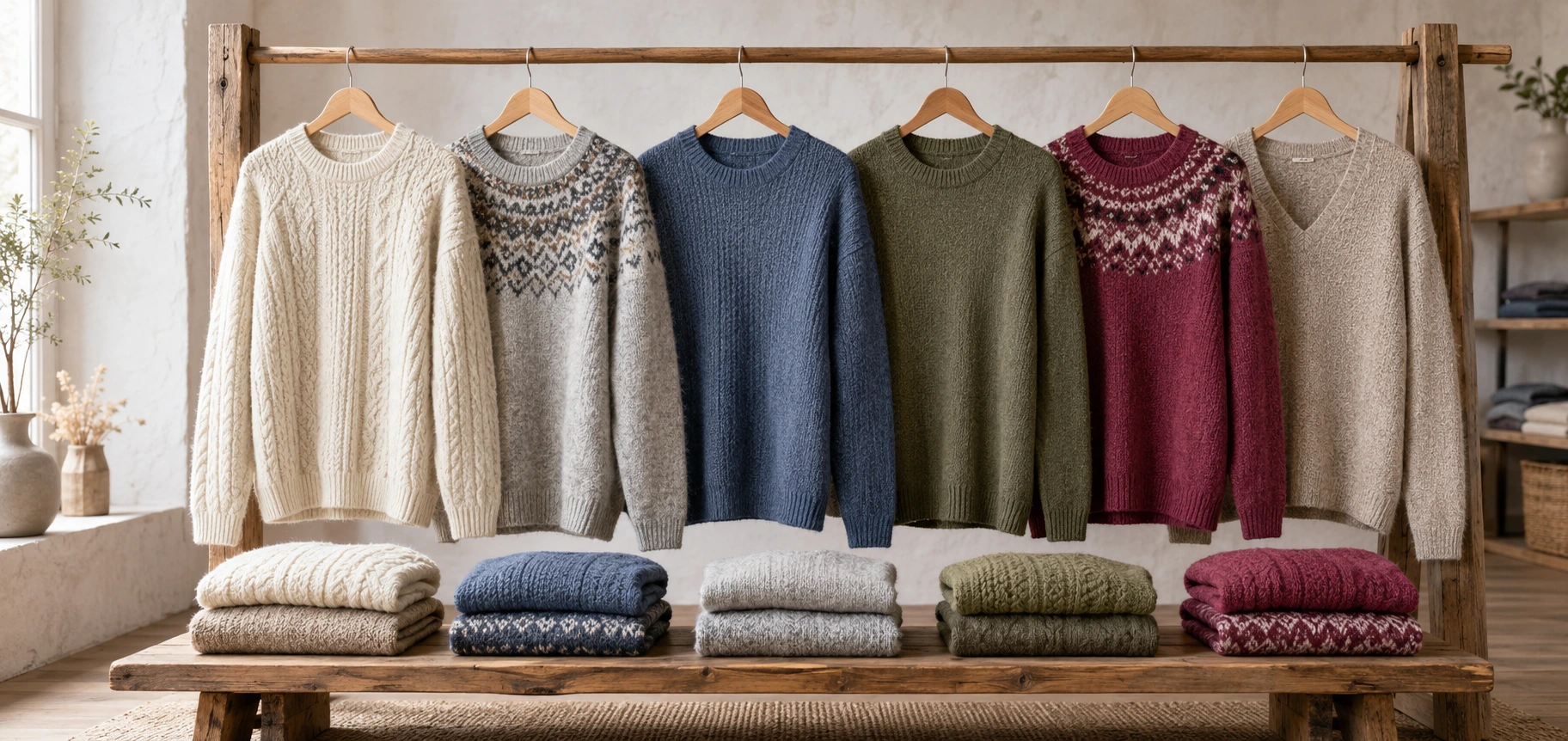
Plain, cable-knit and patterned jumpers hanging on a wooden rail above folded knitwear
Different knit constructions and garment styles.

A jumper for the way you dress

Explore alpaca jumpers →

Start with how you intend to wear it. For a jumper beneath a jacket, compare the sleeve shape, body length and bulk at the shoulder. For a piece worn over a shirt, leave enough room for the layer underneath. Look closely at the knit as well as the colour: a fine plain knit, a textured cable and an open stitch create different garments.

Check the alpaca percentage and the other fibres in the blend. Compare garment weight, seams and the feel of the neckline against your skin. A photograph can show a pattern, but it cannot settle personal comfort. Read the care label before buying, especially if you want a piece that fits an existing washing routine.

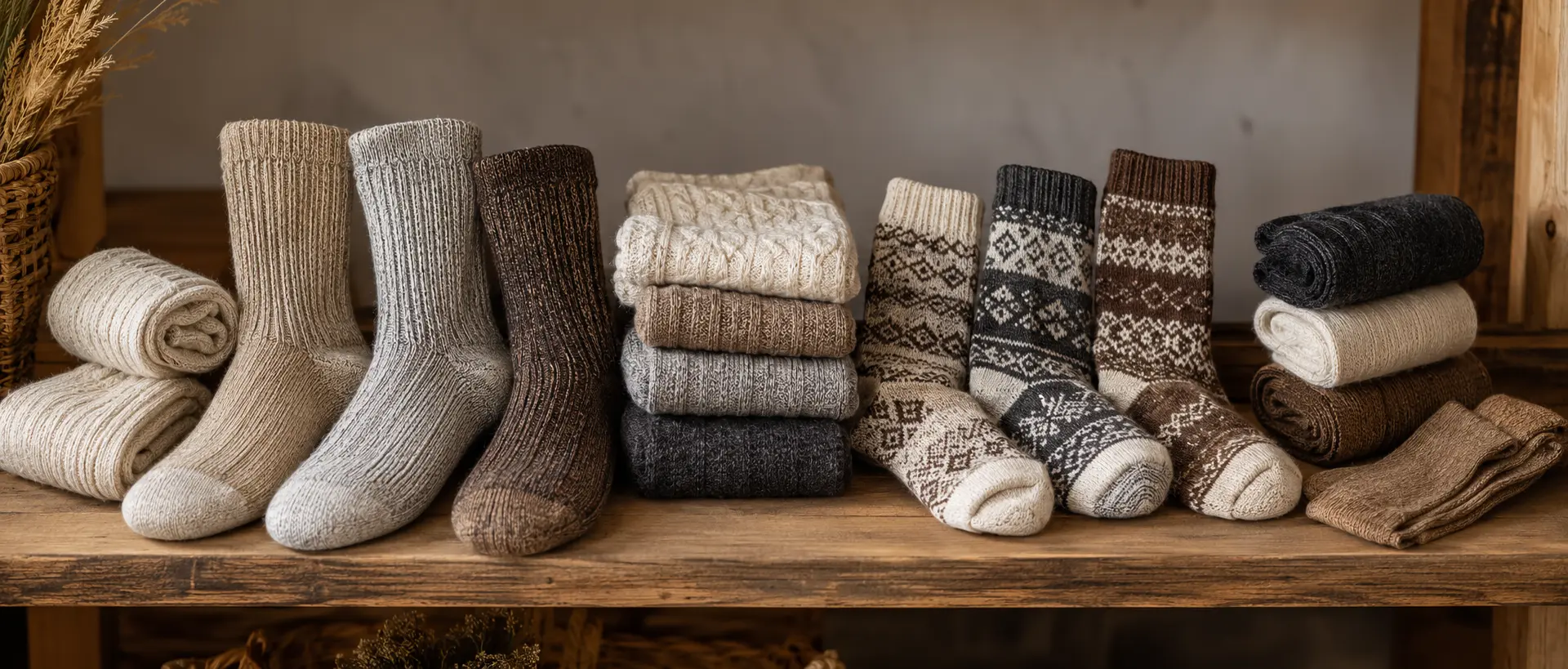
Plain ribbed and patterned socks arranged with folded pairs on a wooden shelf
Sock thickness and construction deserve a closer look.

Think about the shoes, too

Choose socks alongside the footwear they will go into. Compare thickness at the toe and sole, cuff height and the size range. A bulky winter pair and a finer everyday pair fill different roles; try the intended combination if possible.

Read the full fibre blend rather than relying on the word “alpaca” on the front of the packaging. Check the washing and drying instructions, and keep the label for future reference. When comparing pairs, use the same criteria: composition, fit, construction and care.

Read the alpaca socks guide →

Read the label

“Local” can describe
three different things.

A farm shop can carry its own products alongside other makers’ work. Ask about the particular item you are holding: the shop’s address does not establish where its fibre came from.

Grown
Where the alpacas producing the fleece were raised.
Processed
Where that fleece was prepared and spun into yarn.
Made
Where the yarn became the garment you are buying.

Keep exploring

Useful sources, with a purpose

Australian Alpaca Association · Farm Finder

Find further breeder contacts by location, including areas beyond the farms in this guide.

Australian Alpaca Association · Shearing and fibre

A starting point for the practical services and processing behind an alpaca fleece.

South Australian Tourism · Barossa

Place the valley’s towns, vineyards and rural destinations in their regional setting.

South Australian Tourism · Fleurieu Peninsula

Explore the coastal towns and inland experiences around the southern farm localities.

South Australian Tourism · Limestone Coast

Understand the southeast’s destinations, from Naracoorte and Coonawarra to Mount Gambier and the coast.

Around Australia

Five more state guides

New South Wales →

The New South Wales directory reaches from Murrumbateman and the Central Tablelands to Candelo and Verona. Use the individual entries to distinguish breeding enquiries from accommodation or a farm visit.

Queensland →

Canungra, Grandchester and Pechey put Queensland’s listings in very different parts of the southeast. The state guide brings together farm experiences and specialist breeder contacts.

Tasmania →

Tasmania’s entries include Branxholm, Glengarry and Table Cape, alongside a southeastern breeder. Follow the farm descriptions for the distinction between fibre businesses, appointments and visitor experiences.

Victoria →

Explore contacts around Woodend, Strathbogie, the Yarra Valley and West Gippsland. Victoria’s guide is useful for comparing the focus of individual studs across several farming districts.

Western Australia →

Western Australian contacts include Baskerville, Hopeland and Denmark. The guide separates breeder and fibre enquiries from properties offering an established visitor attraction.

All Australian state guides →